
Everyday clinical work
Explore AI support for documentation, treatment planning, psychoeducation, research, supervision and practice management.
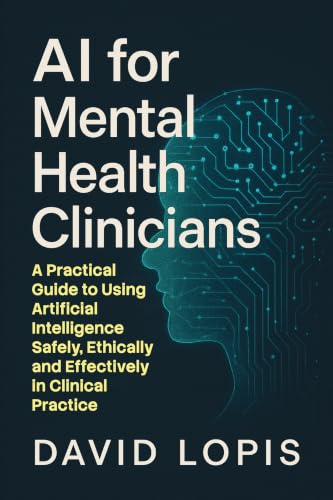
A practical guide for mental health professionals
Using artificial intelligence safely, ethically and effectively in clinical practice.
A balanced, clinician-centred approach to AI in everyday mental health practice.
Explore AI support for documentation, treatment planning, psychoeducation, research, supervision and practice management.
Consider privacy, consent, data security, bias, accuracy and clinical responsibility before bringing AI into practice.
Use technology thoughtfully while preserving therapeutic skill, professional judgement and genuine human connection.
About the book
A practical guide to using artificial intelligence safely, ethically and effectively in clinical practice.
Artificial intelligence is already changing the way mental health clinicians work. For psychologists, counsellors, psychotherapists, social workers and other mental health professionals, the question is no longer whether AI will affect clinical practice, but how to use it thoughtfully, safely and responsibly.
AI for Mental Health Clinicians is a clear and practical guide for clinicians who want to understand what AI can do, where it can help, and where caution is essential. Written for busy practitioners, it explains how tools such as ChatGPT, AI scribes and other emerging technologies can support everyday clinical work without replacing clinical judgement, therapeutic skill or human connection.
This book explores practical uses of AI in areas such as documentation, session summaries, treatment planning, psychoeducation, research, supervision, administration and practice management. It also addresses the ethical and professional questions clinicians need to consider, including privacy, consent, data security, clinical responsibility, bias, accuracy and the limits of AI generated material.
Rather than presenting AI as a magic solution, this book offers a balanced, clinician centred approach. It helps practitioners think clearly about where AI may reduce administrative burden, improve workflow and support better use of time, while keeping professional judgement and client care at the centre of every decision.
Accessible, practical and grounded in the realities of mental health practice, AI for Mental Health Clinicians is for clinicians who want to engage with AI confidently, ethically and with their eyes open.
For thoughtful practitioners
Written for psychologists, counsellors, psychotherapists, social workers and other mental health professionals navigating a rapidly changing clinical landscape.